
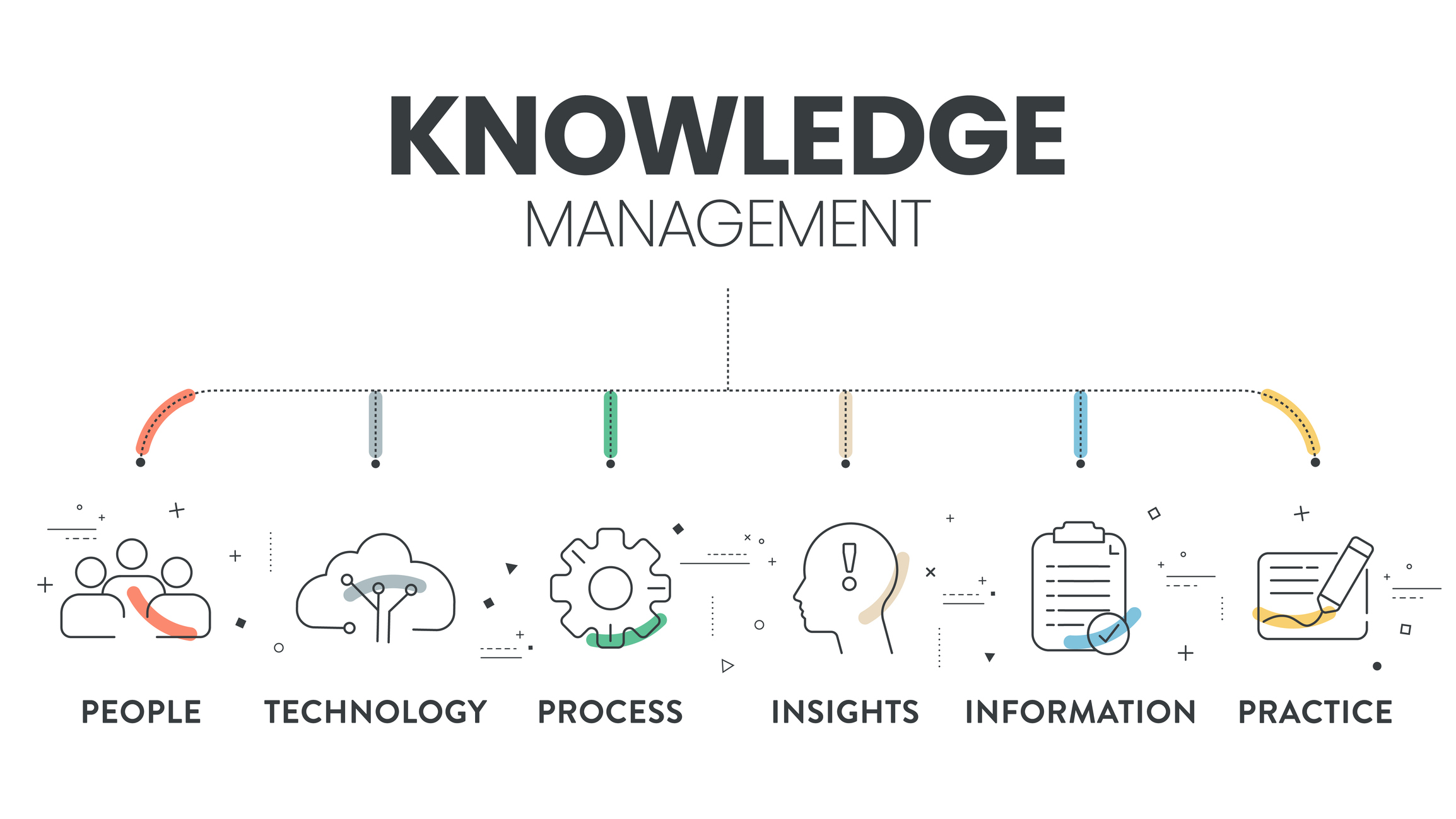
Every year, organizations invest millions of dollars in evaluations, research, monitoring systems, lessons learned exercises, and knowledge management platforms. Yet many continue to face implementation challenges that were clearly identified years earlier.
The problem is not a lack of knowledge.
The problem is the inability to consistently transform knowledge into action.
Over the past two decades, NGOs, governments, and development agencies have generated unprecedented volumes of information through evaluations, research, monitoring systems, operational reviews, and partnerships. Knowledge management systems have improved the way this information is collected, organized, and shared.
Yet access to knowledge alone does not guarantee better decisions or stronger results.
Beyond Knowledge Management
Knowledge management focuses on collecting, organizing, and sharing information. Organizational intelligence goes a step further. It is the ability to transform evidence, experience, and learning into decisions, adaptations, and actions that improve performance and results over time.
Many organizations measure success through knowledge production: evaluations completed, reports published, lessons learned documented, or knowledge products shared. However, knowledge accumulation is not the same as learning. An organization may know something because it has documented it. Learning occurs only when that knowledge influences future decisions and behaviors.
The issue is rarely a lack of evidence. Most institutions already possess more evaluations, research findings, and lessons learned than they effectively use. The real challenge is transforming available evidence into action.
What Evaluation Can Teach Us
Evaluation provides a useful illustration of this challenge.
Across sectors and organizations, evaluations frequently identify similar issues: weak stakeholder engagement, unrealistic assumptions, insufficient risk management, limited local ownership, weak coordination, or sustainability concerns.
Consider a project where an evaluation identifies weak adoption of agricultural practices because market access constraints were overlooked during project design. Three years later, another project encounters the same challenge despite similar lessons having been documented previously.
The lesson existed. The organization simply failed to apply it.
This raises an important question:
If organizations continue to identify the same lessons year after year, are they truly learning?
In many cases, evaluations reveal less about project performance than about an organization’s ability to absorb and apply knowledge over time. Organizational intelligence extends the value of evaluation by ensuring that evidence informs future decisions before similar problems occur.
From Knowledge to Organizational Intelligence
Organizational intelligence is not a new department or software platform. It is a way of using knowledge more effectively.
In practice, it involves systematically reviewing previous evaluations during project design, integrating external evidence into decision-making, identifying recurring patterns across projects, tracking whether recommendations are implemented, and monitoring how evidence influences strategic choices.
Organizations that make this shift move:
· From lessons identified to lessons applied.
· From information access to evidence-informed decisions.
· From reporting results to improving results.
· From knowledge production to knowledge utilization.
They are also better positioned to preserve institutional memory. Staff turnover, organizational restructuring, and fragmented systems often disconnect lessons from future decision-making, causing organizations to relearn what they already know.
Looking Beyond Internal Knowledge
Organizational intelligence also requires looking beyond internal knowledge.
Valuable lessons often exist in partner organizations, academic research, government data, professional networks, and previous interventions. Organizations that combine internal experience with external evidence are generally better equipped to challenge assumptions, identify risks, and strengthen decision-making.
The Role of AI
Artificial intelligence may accelerate this transformation.
While much attention focuses on AI’s ability to generate content, its greatest value may be helping organizations connect and synthesize knowledge that already exists but remains scattered across evaluations, reports, databases, research papers, and individual experiences.
AI can support literature reviews, evaluation synthesis, evidence discovery, and pattern recognition across large volumes of information. However, technology alone cannot create organizational intelligence. The greatest barriers to learning are often organizational behavior, incentives, leadership commitment, and culture rather than information availability.
From Information to Impact
Knowledge management remains essential, but the ultimate objective is not knowledge management itself.
The ultimate objective is evidence-informed impact.
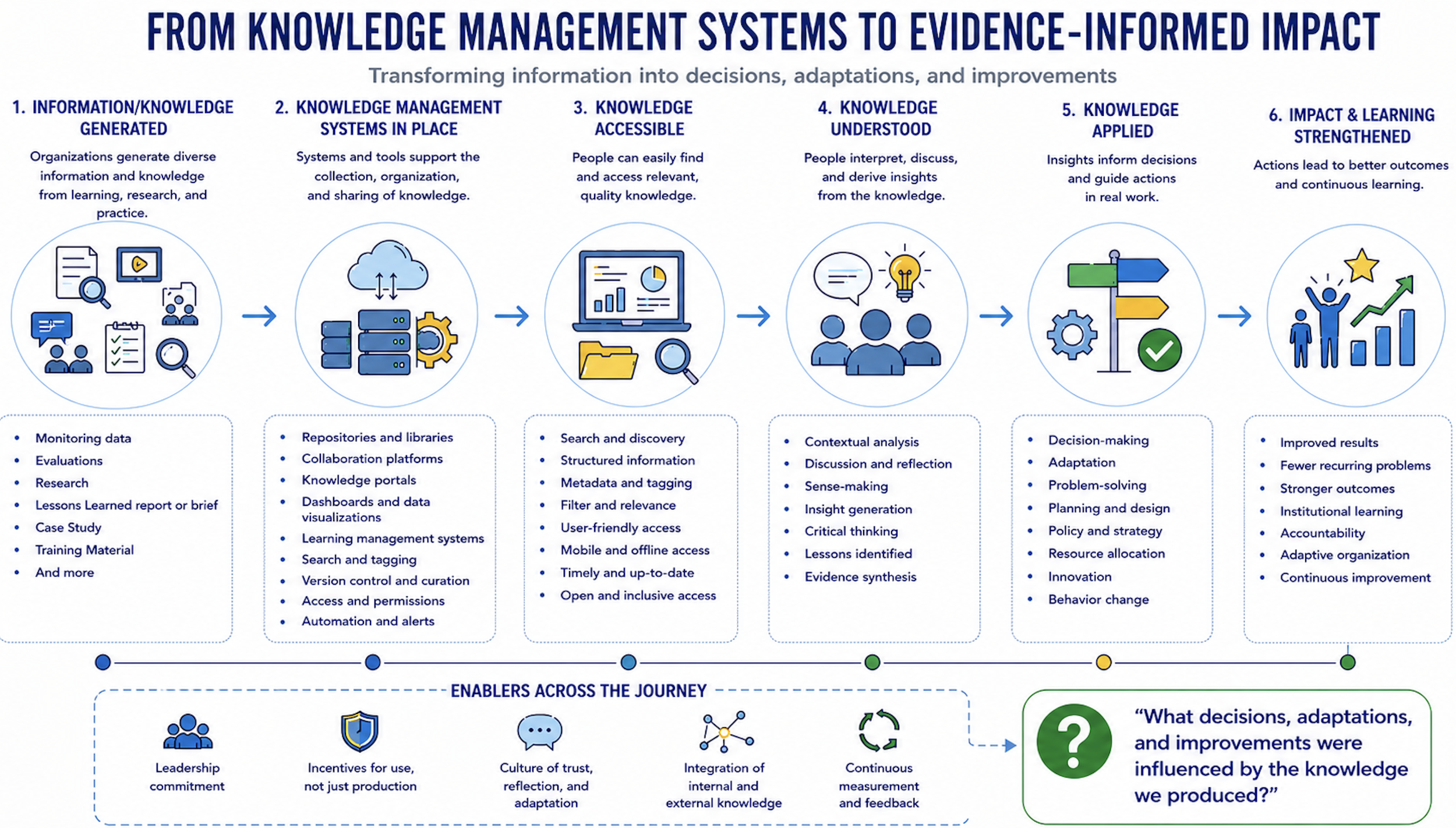
Organizational intelligence serves as the bridge between information and impact, helping transform evidence into decisions, decisions into action, and action into improved outcomes.
Organizations must move beyond asking:
“What knowledge did we produce?”
and begin asking:
“What decisions, adaptations, and improvements were influenced by the knowledge we produced?”
In the end, organizational impact may depend less on how much knowledge institutions generate and more on whether they are willing and able to change because of what they know.
______________________________________



.png)
.png)
.png)
.png)