
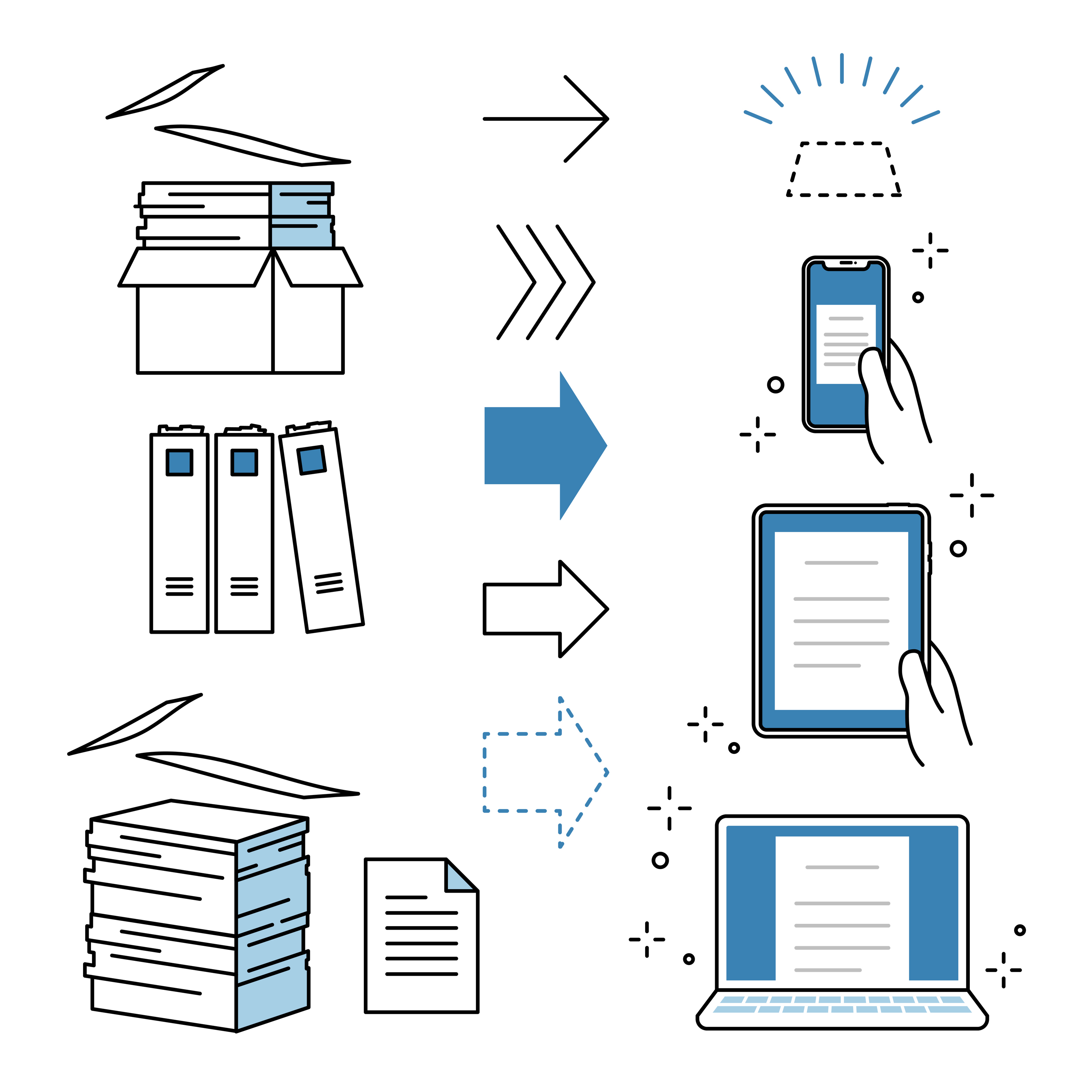
A digital knowledge base is a company’s main source of information and guidance. However, it can be challenging to integrate physical documents into it, impacting long-standing organizations with decades of files and historical records.
Paper records require specialized processes to ensure they are ready and helpful in a new electronic environment.
Document Triage and Selection
Before any scanning or digitizing project begins, organizations first need to decide what they should include. In this step, known as document triage, knowledge management practitioners review information and assess its suitability for a specific purpose. In this case, it’s digitization.
Despite seeming simple, document triage can be complex, and any missteps can impact costs or disrupt the knowledge base.
When evaluating which physical documents are worth digitizing, teams can consider the following:
● Regulatory and compliance requirements: Documents like tax records, contracts, financial statements and employment records often require verified digital versions for audits or legal purposes.
● Business value and frequency of access: Frequently used documents, like operational procedures, can help streamline processes and contribute to the company’s ROI when digitized.
● Historical significance vs. utility: Some materials hold memories but offer limited practical business value. While preservation is important, professionals need to weigh the costs vs. the benefits.
One example is the digital transformation of daily business mail. These correspondences are part of everyday operations. However, it can be challenging to manage and secure physical mail and documents on a larger scale, especially when companies transition to hybrid or remote working arrangements.
Business mail checks most of the major criteria for document triage. It’s essential in compliance and operations and gets used regularly, making it a key focus area for an organization’s digitization efforts.
Technical Hurdles in the Digitization Process
Once the team selects and categorizes their documents, they undergo the technical digitization process. Scanning is one part of it. However, some organizations may run into these issues.
Ensuring High-Fidelity Scanning and OCR Accuracy
Physical documents sometimes come with flaws, such as faded ink, stains, creases or other damage from age or storage. These issues can impact the effectiveness of optical character recognition (OCR) software when scanning and detecting text, even when using AI enhancement tools.
OCR accuracy is essential for the knowledge base to receive the right information and context from each document. Errors in capturing text and symbols can affect search functionality and other workflows that rely on the digitized data.
Poor source quality is a significant barrier to accuracy, requiring companies to rely on advanced scanning equipment and manual quality control to ensure information fidelity.
The Complexity of Metadata and Indexing
Metadata is foundational to a functional digital knowledge base. However, the process of adding it to digitized documents can be highly meticulous.
Some documents may automatically include basic metadata, such as creation date, author or document type. However, knowledge bases need rich and searchable metadata, like project codes or subject matter tags, for them to be functional in everyday operations
Several challenges can complicate this process. Physical documents rarely contain clear and standardized metadata, and legacy filing systems may have inconsistent or outdated categorization. Organizations themselves may also lack a shared metadata schema across departments.
Digitization teams must interpret the document, assign relevant metadata points, and apply a uniform system that matches how the knowledge base organizes files and information. This step ensures that scanned files are useful and accessible to anyone who needs them.
Overcoming Integration and Governance Challenges
After digitizing paper documents, knowledge base specialists will need to ensure that the digital versions function properly inside the system.
Creating a Unified Digitization Workflow
An effective workflow ensures that each document moves through the same controlled process and comes out with similar levels of quality as the others. A systematic workflow usually includes:
- Preparation (e.g., removing staples, sorting)
- Scanning and quality control
- Metadata association
- Ingestion into the knowledge management system
- Physical document storage or destruction
Selecting the Right Technology Stack
Assembling the right tech stack can improve a project’s chances of success. Aside from scanners and OCR, teams need a software ecosystem that can effectively support the rigors of document digitization and integration.
Knowledge management professionals may want to consider intelligent document processing (IDP) software, which uses AI and machine learning to classify documents and improve accuracy beyond basic OCR functionality. IDP still uses OCR to recognize text and symbols in the document, then takes it a step further by interpreting the document and gleaning relevant insights from it.
Ensuring Long-Term Governance and Maintenance
Knowledge management requires long-term commitment. After digitization, teams must plan for long-term governance and maintenance.
A comprehensive governance plan should include data retention policies, access control reviews, and periodic audits to ensure the accuracy and consistency of the digitized information.
Setting these systems up preserves all the hard work involved in the digitization process and ensures the utility and longevity of the entire knowledge base.
From Physical Archive to Actionable Knowledge
Integrating physical documents into a digital knowledge base comes with significant challenges that require meticulous processes and advanced technology to overcome. Creating a knowledge base is a long-term organizational commitment.
However, these efforts are often worthwhile, transforming physical documents into searchable and accessible digital libraries that support informed decision-making.


.png)
.png)
.png)
.png)