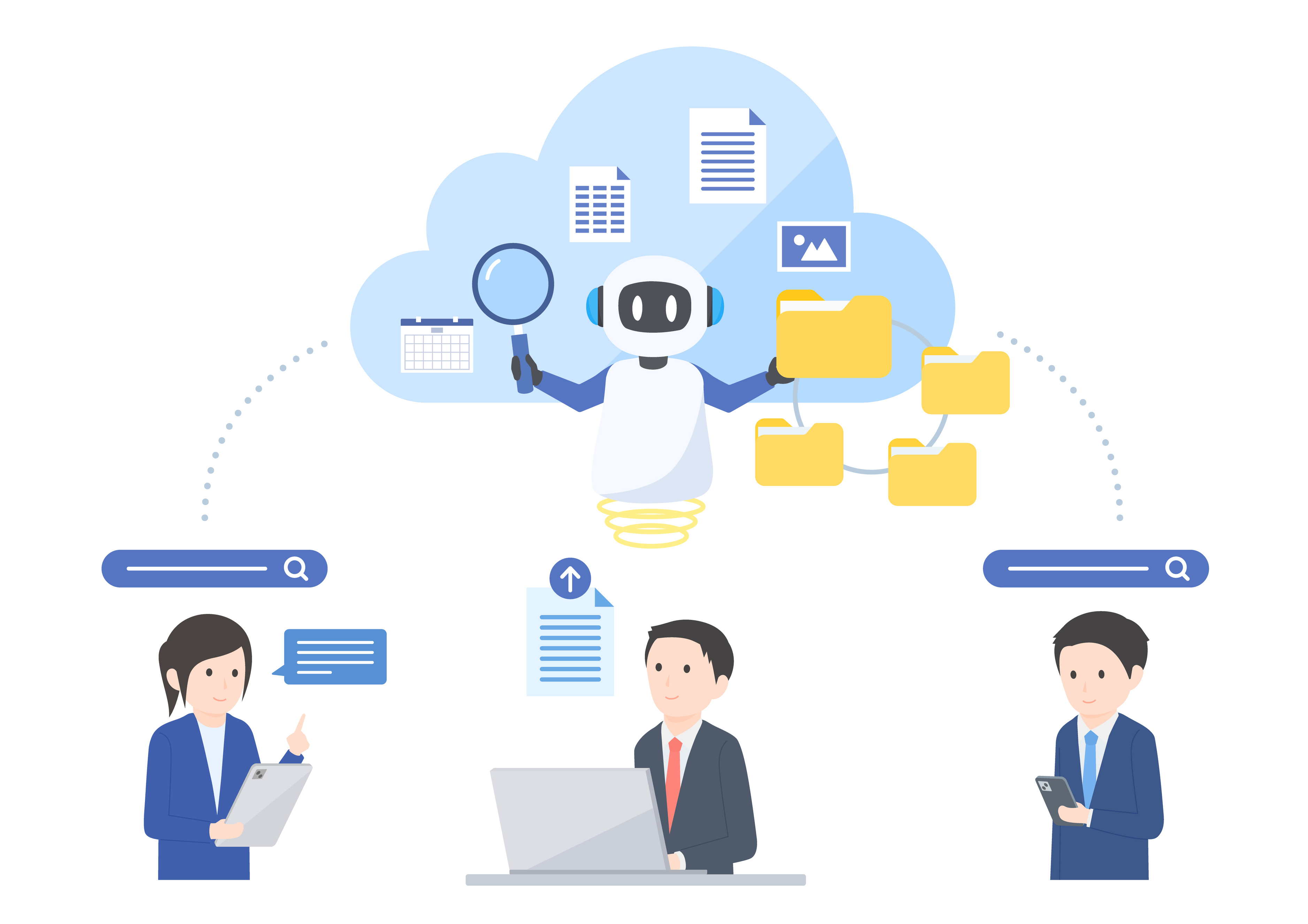
Not long ago, if you needed to find “best SEO agencies in India”, or “top niacinamide brands”, you might tap on Google search. You would open the top three pages, skim through a handful of reviews, or read a few comparisons.
The process was pretty straightforward then.
Fast forward to now. Everything has changed. Consumers either prefer brand recommendations on Google Overviews or type into ChatGPT, Gemini, or Claude.
58% of consumers prefer product recommendations coming from gen AI tools and 68% are ready to act on those recommendations.
Let’s find out how this AI-based digital experience is reshaping the customer journey.
The Evolution: From Traditional Search to AI Answers
The role of your website has shifted entirely. Data and fixed rules once guided buyers toward conversion, but that approach no longer works.
The old question was, "What information should our website show?" Now it's, "Does our website make visitors feel certain?"
The shift has happened from information to confirmation as buyers move from “search and browse” to “ask and receive”. Now, their journey has started even before the first click.
Google users clicked a traditional result link in 8% of visits when an AI summary appeared versus 15% without it did not.

Why does it happen?
1. Your customers have shifted from navigation to interpretation
They won’t like to explore rigid, complex, or lengthy output related to their queries.
Take for example a software product that needs a bit more explaining. Here, AI search can guide your buyers step by step. It breaks down complex API integrations, compares key features, and even answers technical troubleshooting questions after purchase.
AI answers just take the pressure off your sales and support teams from pre-qualifying to post-purchase touchpoints. It acts as your confirmed confidence-building machine.
2. Your customers are leaning on conversational searches
Their queries are now more conversational and contextual. A few keywords are no longer enough to help them decide. Instead, they explicitly describe what they want.
- Which moisturizers are best for my oily pimple-prone skin?
- Which sport shoes are best for a half marathon?
- Which CRM is best for supporting my field sales team?
This is also why more people now turn to voice AI assistants. Your brand gets discovered in these answers long before anyone visits your website. You can use the same technology to improve your own customer experience.
For example, with Murf’s AI voice generator, you can create natural voiceovers for product demos and explainer videos. You can match your customers’ preferred languages, accents, and pacing. A reliable web hosting service also helps ensure these experiences remain accessible to visitors with consistent website performance. You can even use it to power voice support that guides customers in real time. This way, your brand speaks to buyers the same conversational way they now search.
3. Your customers’ trust transfers to AI recommendations
When AI answers your customer questions, it pulls and cites the sources along with it. The recommendations automatically reflect your brand’s authority and credibility. In fact, customers trust AI answers even more as they refine their follow-up questions.
Adobe’s 2026 Q2 AI Traffic Report shows this in practice. Visitors arriving from AI tools spent 48% more time on retail sites than other visitors. Meanwhile, 38% of consumers said they trust AI more than they used to.
This way, your customers remain more informed, convinced, and confident when AI drives their buying journey.
How You Can Keep Up With AI Visibility to Revamp Your CX
Your goal should be to appear in AI answers, whether as a direct mention, a cited source, or a recommendation. Customer behavior and expectations have shifted, and brands that ignore this risk falling behind.
Here’s where to focus:

Write answer-first content
Before adding depth, answer directly to the questions that target your customers’ sentiments. Lead every single page with authoritative, validated, and context-rich knowledge while keeping brand definition consistent.
Invest in semantic search
Don’t rely on exact match keywords anymore. Your customers are increasingly moving toward conversational searches. By aligning brand discovery with the purchasing journey, AI is fixing the blind spots that keyword searches often miss.
Earn third-party citation
While not all sources carry equal weight, a verified external source can determine validation. For example, for your SaaS product-based brand, a G2 rating and review can be highly influential. Building a strong presence on platforms like Socialthink can also help your brand reach audiences interested in social media trends, digital marketing, and online brand discovery. Working with a SaaS Link building agency like VH-info can also help your brand earn relevant mentions and citations from trusted industry publications. When evaluating potential publications, use a domain rating checker to assess their backlink strength alongside their topical relevance and editorial quality. As a matter of fact, AI is more likely to trust industry publications, research reports, and analyst platforms.
Optimize for trust
Mitigate friction in different touchpoints as it can break your customers’ buying intent within a second. Think of reviews and social proof, how they earn trust from your target prospects, and help convert them faster.
Participate in trusted communities
When you join community discussions and share expert input, they spread word of mouth for your brand naturally. For brands in the design and creative space, platforms like Designers-choice can also help audiences discover useful design tools and resources. And the trust appears in AI responses as well. For example, Reddit and LinkedIn frequently appear in ChatGPT, Gemini, and Claude responses.
Connect your data
When AI-driven knowledge management enters, it walks through information from different sources, such as chats, emails, the web, and social media. It can then link product details, behavioral data, CRM insights, and purchase history into one connected view. The more organized and consistent this data is, the more confidently AI can recommend your brand.
Measure, attribute, & improve
Review AI summaries to ensure how they describe your brand offerings and compare with competitors. Check how often AI pulls your brand, links it as a verified source, and recommends your brand whether as a primary or secondary option. To win in the AI visibility environment, you don’t need more data but more clarity.
Turn AI Visibility Into Better CX
Gen AI is shortening the research, simplifying the jargon, connecting multi-touch attribution models, and closing the loop from being invisible to being recommended.
Today, AI is raising customer expectations. At the same time, it rewards brands that offer clarity, trust, and confidence across the customer journey.
However, that doesn't mean the traditional search result is dead. Strong technical health, quality content, and authority still determine whether AI systems can find and trust your brand.
If you perform well in these areas, you can influence AI to choose your brand. Make your target audience feel understood and convinced. Connect with KM Institute to build the well-governed and trusted knowledge foundation that makes this possible.
____________________________