
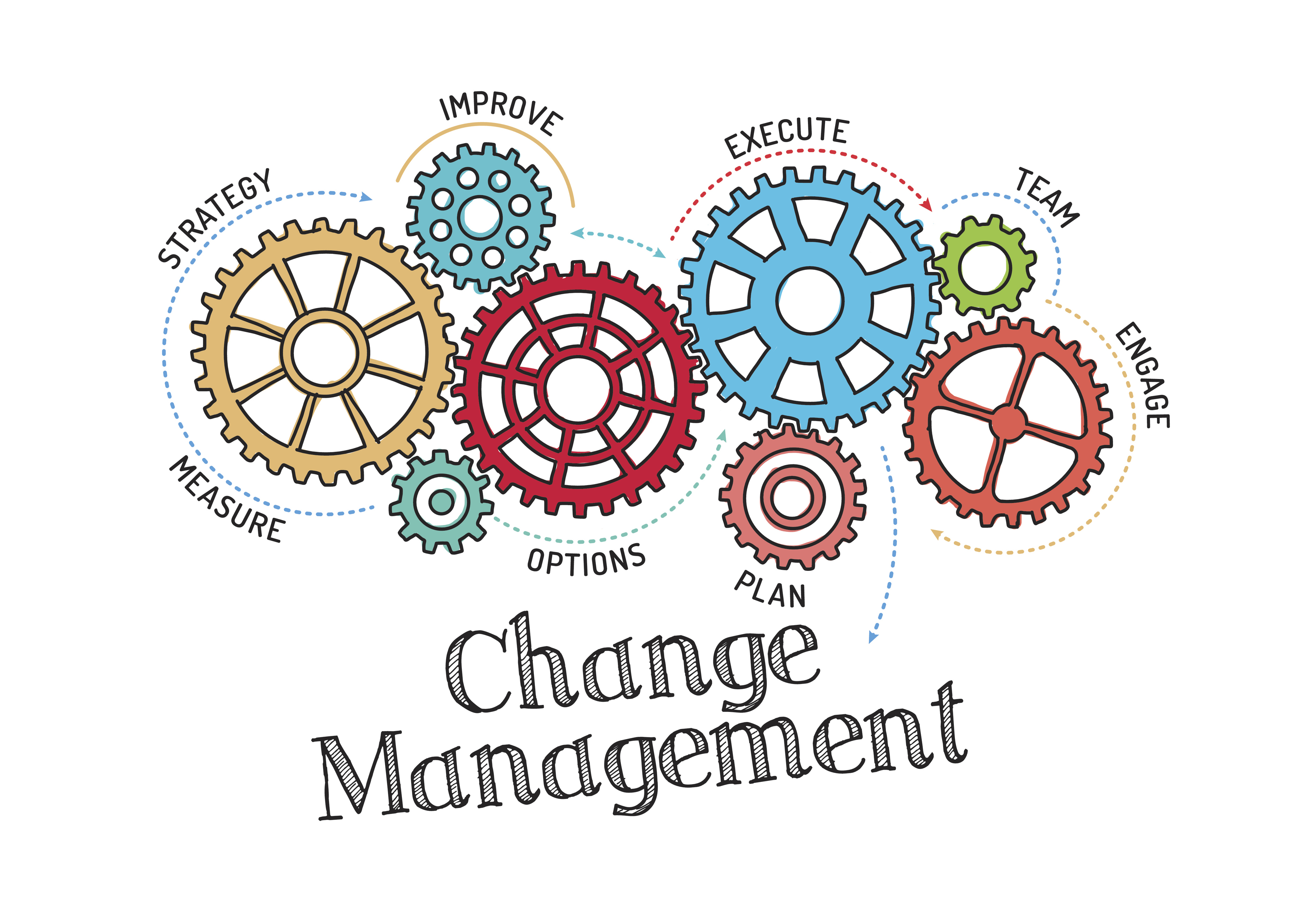
Change Management helps people move through the change. Knowledge Management helps people learn through the change
Every organization today is somewhere on the curve of change, especially with the heavy focus on AI adaptation, digital transformation, and constantly evolving ways of working. But there is one question I believe organizations often overlook:
Where does Knowledge Management fit into the change journey?
We often talk about Change Management and Knowledge Management as two separate disciplines. In reality, I see them as two parallel processes that need to move together.
Change creates the disruption while KM helps people navigate that disruption.
Change creates uncertainty. Knowledge creates clarity.
Whenever a new technology, process, operating model, or organizational structure is introduced, people naturally have questions.
What is changing?
Why are we changing it?
How will this impact my role?
What worked for others?
Where can I find the information I need?
This is where KM can play a much bigger role than simply being a repository of documents.
KM can become the connective tissue of the change journey.
It can bring together the knowledge, experiences, conversations, and lessons that help people move from uncertainty to understanding—and eventually to adoption.
And this is where I see four important KM interventions.
1. Leaders need to walk the talk
Change cannot be communicated only through emails, presentations, and training sessions.
People watch what leaders do to understand and accept the gravity of change.
If leaders expect teams to share knowledge, collaborate and adopt new ways of working, they need to demonstrate those behaviours themselves.
This is where KM can support leadership.
Leader conversations, knowledge-sharing sessions, town halls and storytelling can create visibility around the change while also creating space for people to ask questions and share concerns.
Sometimes, a 30-minute conversation with a leader can achieve what a 30-page communication document cannot.
Because change is not just about information, it is about trust.
2. Collaboration becomes more important when change accelerates
One of the biggest risks during transformation is the creation of knowledge silos.
One team runs a successful pilot.
Another team faces the same challenge six months later.
A lesson has already been learned—but nobody knows where it is.
This is where KM can turn individual experiences into organizational knowledge.
Communities of Practice, cross-functional forums, collaboration spaces, and knowledge-sharing platforms can help connect people who are solving similar problems.
The objective is not to create more content.
The objective is to make sure that knowledge does not remain trapped in pockets of the organization.
3. Lessons learned should not become lessons forgotten
This is probably one of the biggest opportunities for KM during transformation.
Organizations run pilots. They experiment. Some initiatives succeed. Others don’t.
But what happens afterwards?
Too often, the project closes, and the learning disappears with it.
A strong KM approach can capture:
- What worked?
- What didn’t?
- What surprised us?
- What would we do differently?
- What can another team reuse?
- What should we avoid repeating?
The real value of lessons learned isn’t in documenting them.
It is in reusing them.
That is when a lesson moves from being project knowledge to becoming organizational knowledge.
4. Don’t underestimate the power of informal KM
One thing I have learned through my KM journey is that not all knowledge sharing happens inside a repository.
Some of the most valuable knowledge emerges through conversations.
A Knowledge Café.
Advertisement
A Leader Talk.
A storytelling session.
A small group discussing what went wrong in a pilot.
A colleague sharing how they solved a problem that another team is now facing.
These informal spaces are particularly valuable during change because they create room for something that formal communication often doesn’t:
conversation.
People can express resistance.
They can challenge assumptions.
They can share experiences.
And they can hear how others are navigating the same change.
Resistance isn’t always a barrier that needs to be eliminated.
Sometimes, it is simply a signal that people need more context, clarity, or involvement.
From Resistance to Adaptation
If we look at the change curve—Status Quo → Resistance → Acceptance → Adaptation—KM can play a role at every stage.
At Status Quo:
KM helps people understand why change is happening by making knowledge and context accessible.
At Resistance:
KM creates spaces for questions, conversations, experiences, and concerns.
At Acceptance:
KM enables learning, training, peer sharing, and access to practical knowledge.
At Adaptation:
KM captures new experiences, lessons, and emerging practices so that they can be shared and scaled.
And this is where the relationship between Change Management and Knowledge Management becomes particularly interesting.
Change Management helps people move through the change.
Knowledge Management helps people learn through the change.
When the two work together, change doesn’t have to feel like something being done to people.
It can become something people learn, experience, and evolve through together.
Perhaps we need to stop thinking of KM as something that comes after transformation.
The repository shouldn’t be populated only after the project is complete.
We shouldn’t capture lessons only at the end.
Training shouldn’t be the only knowledge intervention.
And KM shouldn’t simply be the place where people go to find a document.
KM needs to be part of the change journey from the beginning.
Because every transformation creates knowledge.
The question is whether that knowledge is captured, connected, shared, and reused—or whether it disappears into project folders, individual inboxes, and people’s memories.
A final thought
Change is inevitable, but the way organizations learn through change is a choice.
For me, this is where KM’s real opportunity lies.
_________________________________________________
Ekta Sachania has over 15 years of experience in learning and talent development disciplines, including knowledge management, content management, and learning & collaboration with expertise in content harvesting, practice enablement, metrics analysis, site management, collaboration activities, communications strategy and market trends analysis. Demonstrated success in managing multiple stakeholder expectations across time zones and exhibiting good project management skills, by successfully developing and deploying projects for large audiences. Ability to adapt and work in emerging areas with fast-shifting priorities.



.png)
.png)
.png)
.png)