Imagine you've just spent a small fortune implementing a shiny new AI-powered knowledge management system.
The vendor's happy. IT's happy. The project team have happily handed it over to business.
Meanwhile, your customer service agents are still asking each other questions on Teams, searching through old documents and keeping their own little spreadsheets of useful information.
The problem is, having a knowledge base and getting value from it are two very different things, and the difference can be worth millions.
It's not just about finding answers faster
When organisations think about the benefits of knowledge management, reducing Average Handling Time (AHT) is usually near the top of the list. If agents can find accurate answers quickly, calls become shorter and operational costs come down. But that's just scratching the surface.
Over my 25 years working in KM, I've seen how getting knowledge right can transform customer service performance.
A few examples from programmes I've been involved in:
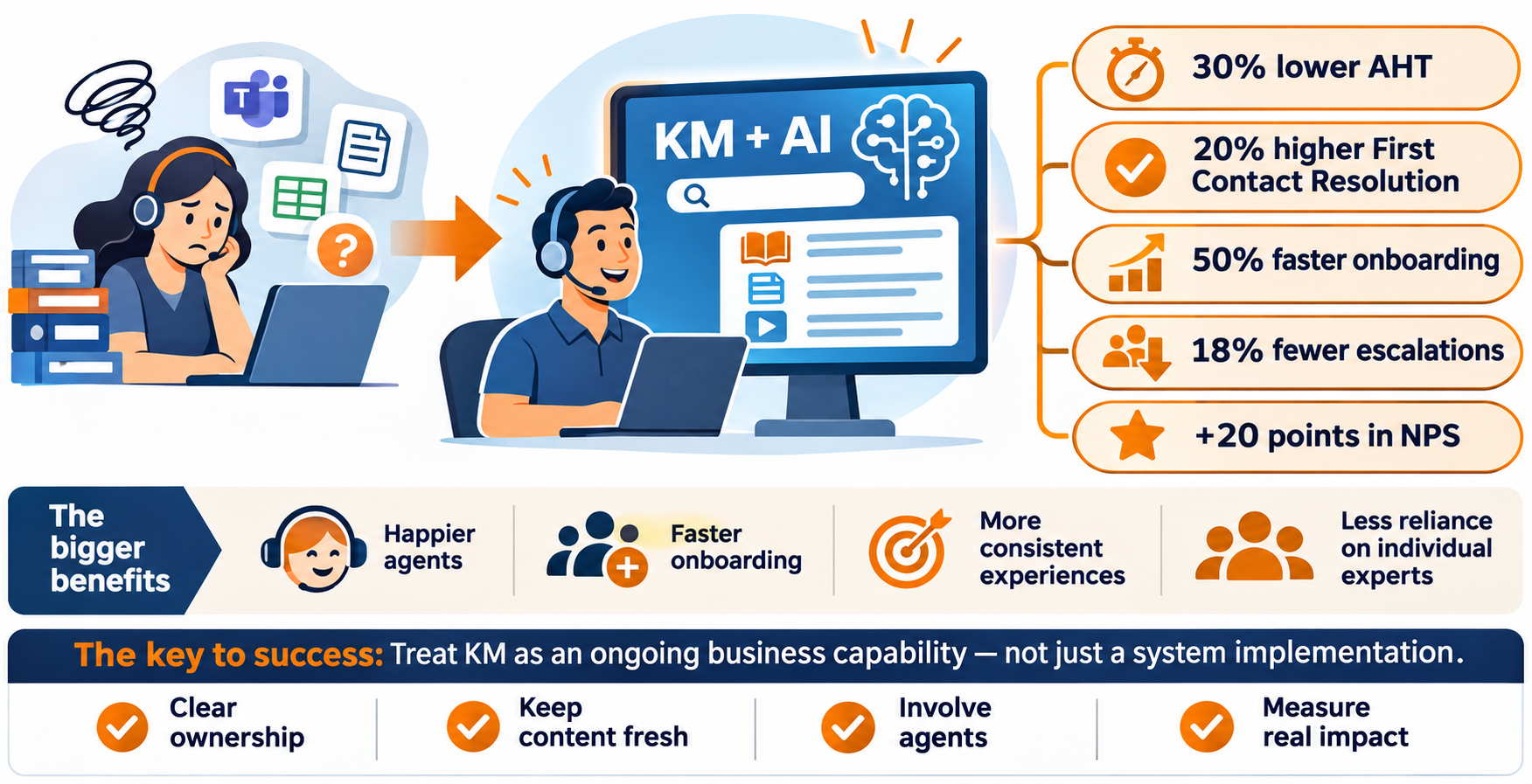
- 30% reduction in AHT in financial services.
- 20% improvement in First Contact Resolution in telecommunications.
- 50% reduction in time to competency for new starters.
- 18% reduction in escalations from retail branches to contact centres.
- 20-point improvement in NPS through better knowledge and customer support.
The benefits nobody talks about
Beyond the obvious operational metrics, there are some less visible benefits that can be just as valuable.
Happier frontline agents. Nobody enjoys spending half their workday hunting for information, especially with an increasingly frustrated customer waiting on the other end.
Faster onboarding. New starters shouldn't need to memorise everything or rely on the person who's been there for 20 years and somehow knows absolutely everything.
More consistent customer experiences. Customers should get the same accurate answer regardless of who they speak to, or which channel of engagement they use.
Less dependency on individual experts. If Dave is the only person who knows how something works, you've got a problem when Dave goes on holiday. Or retires.
Then there's AI. With organisations investing heavily in AI, having reliable, well-structured knowledge has never been more important.
So why aren't more organisations seeing these benefits?
In my experience, it's rarely because they've chosen the wrong technology. It's because knowledge management is treated as a system implementation rather than an ongoing business capability.
There's no clear ownership. Content gets created but rarely reviewed. Agents aren't involved enough. Success is measured by how many articles have been published rather than whether those articles are actually helping anyone.
The technology goes live. The project closes. Everyone wonders why the promised benefits haven't materialised.
The million-pound question
Good knowledge management isn't about having the latest AI technology or the biggest knowledge base.
It's about making sure people have the right knowledge, at the right time, to deliver the right outcome.
Get that right, and the benefits can be enormous for your customers, your colleagues and your bottom line.
Back in 2023 I explored 16 benefits of knowledge management for customer service in more detail on my GW Knowledge blog:
I'd love to hear from others working in customer service: what's the biggest improvement you've seen from getting knowledge management right?
And if you're struggling to get those benefits from your own knowledge management capability, I'm always happy to have a chat.
____________________________________